
In the footwear industry, grip is not just a feature-it is a performance and safety requirement. Whether it’s sports shoes, outdoor footwear, or work shoes, the quality of the sole determines stability, durability, and user confidence.
At Lujo, high-grip sole technology is developed through a combination of material science, design engineering, and precision manufacturing.
Understanding how high-grip soles are made helps retailers, distributors, and buyers identify truly performance-driven footwear.
Why High-Grip Soles Matter
High-grip soles are designed to maintain traction on different surfaces such as concrete, tiles, outdoor terrain, or wet floors. Poor grip increases the risk of slipping and reduces overall performance, especially during movement-intensive activities.
For B2B buyers, footwear with advanced grip technology translates into:
- Higher customer satisfaction
- Reduced safety complaints
- Stronger product reliability in competitive markets
Rubber Compound Engineering
The foundation of any high-grip sole lies in the rubber compound used. Different blends of natural rubber, synthetic rubber, and performance additives are engineered to balance grip, flexibility, and durability.
Softer compounds improve surface contact and traction, while harder compounds enhance wear resistance. At Lujo, compound formulations are selected based on the shoe’s intended usage—sports, outdoor, or work environments.
Sole Pattern & Tread Design
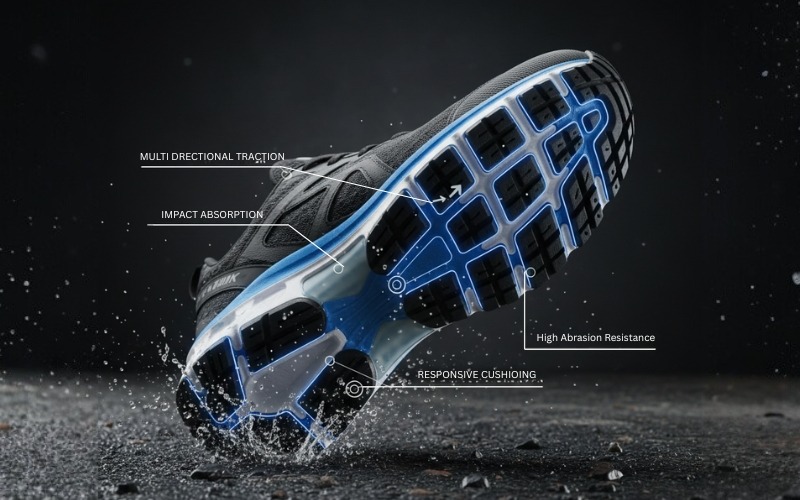
Grip is not just about material; it is also about tread design. High-grip soles feature specially designed tread patterns that create friction and prevent slipping.
- Deep grooves improve traction on wet surfaces
- Multi-directional patterns enhance stability during movement
- Strategic spacing allows debris and water to escape
Lujo’s sole designs are engineered to provide consistent grip without compromising flexibility or comfort.
Surface Contact Optimization
High-grip soles are designed to maximize surface contact area. The more effectively a sole connects with the ground, the better the traction.
This is achieved through:
- Flat contact zones for stability
- Flex grooves that adapt to natural foot movement
- Pressure distribution zones to reduce slipping
These design elements ensure grip remains reliable even during long hours of use.
Testing & Performance Validation
Before reaching the market, high-grip soles undergo multiple performance tests. These include:
- Slip resistance testing on dry and wet surfaces
- Flex and durability testing
- Abrasion resistance checks
At Lujo, testing ensures that soles perform consistently across varied environments, meeting industry and commercial quality expectations.
High-Grip Without Compromising Comfort
One challenge in sole engineering is achieving strong grip without making the shoe too rigid. Modern sole technology focuses on balancing traction with comfort.
Lujo integrates:
- Lightweight sole structures
- Shock-absorbing layers
- Flexible grip zones
This ensures high-grip soles support both performance and all-day wearability.
Applications of High-Grip Sole Technology
High-grip sole technology is essential across multiple footwear categories:
- Sports and training shoes
- Outdoor and trekking footwear
- Safety and work shoes
- Casual footwear for urban environments
Lujo’s Approach to High-Grip Sole Technology
As a B2B-focused footwear brand, Lujo emphasizes innovation, consistency, and scalability in sole development. From compound selection to final testing, every stage is designed to deliver soles that meet performance expectations across diverse markets.
Our focus remains on providing partners with footwear solutions that combine technology, durability, and commercial reliability.
Conclusion
High-grip soles are the result of advanced material engineering, intelligent design, and strict testing standards. They play a critical role in safety, comfort, and long-term performance.